
Visitor guide
Linlithgow Cross Well: what to look for
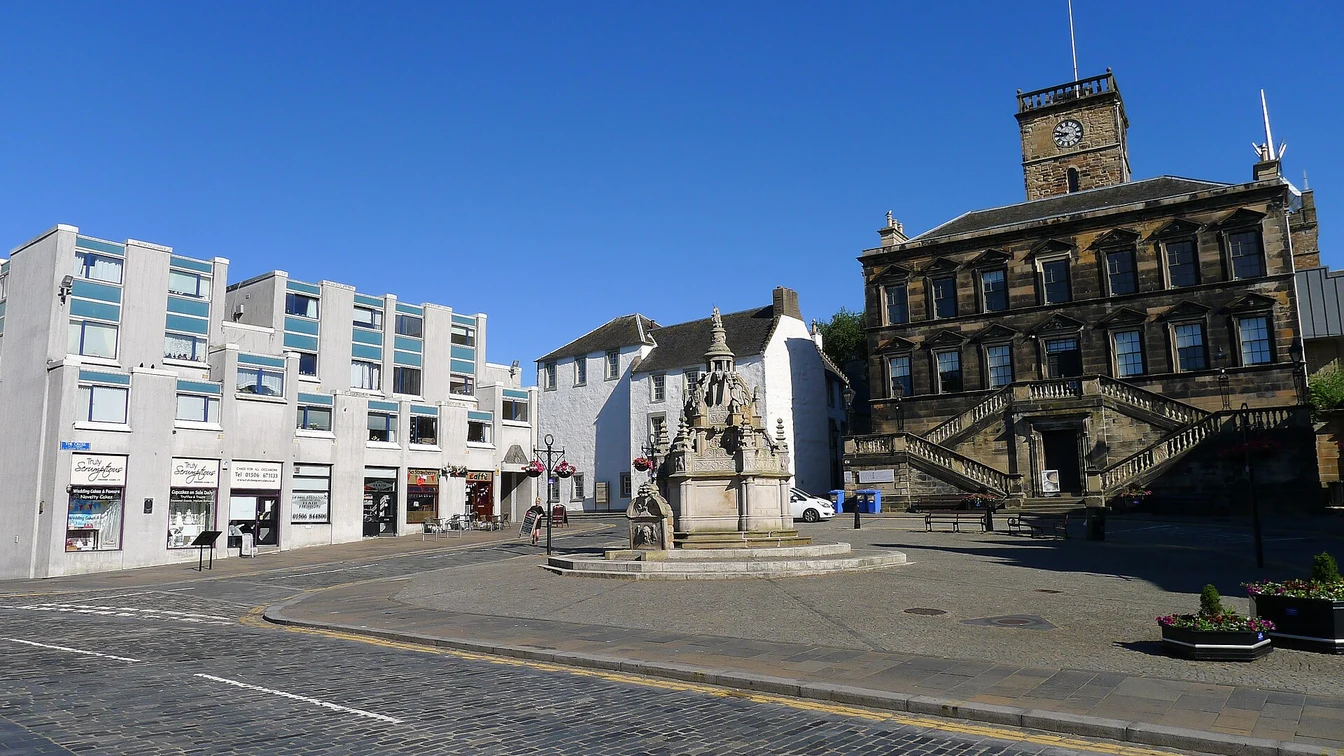

Linlithgow Cross Well is a carved stone landmark in the town centre.
Linlithgow Palace · Last updated
The short answer
Look at the well’s six-sided form, carved stages and unicorn. The present stonework dates to 1807 in the heritage source.
Find the detail you need4
Linlithgow Cross Well is a carved stone landmark in the town centre. The heritage record dates the present well to 1807. It describes earlier versions on the same site. Make it a short stop on a walk through the centre. It is a civic feature, separate from the fountain inside the palace court.
The Cross Well’s shape
The listed-building record describes cream sandstone and a six-sided form. A stepped base supports the raised body. Carved stages draw your eye upwards. The upper form is more complex than a plain water point.
The record names a unicorn above the cupola. Look for the shapes from safe ground around the well. Do not climb for a closer view. Give other people room and keep access through the centre clear.
A historic well is not proof of drinking water today. The guide makes no claim that the water flows or is safe to drink. Follow current signs for any permitted use. The carving can be enjoyed without touching or climbing it.
More than one period of work
The source dates the present carving to 1807. It also describes an earlier dipping well from about 1535. Later work rebuilt and repaired the feature. The oldest part of a story is not always the date of what you see now.
That is a useful way to read an old town. A landmark can hold traces of several periods. A repair can preserve a shape without leaving the original material in place. Use the source for the full account rather than judging the date from how weathered the stone looks.
The record also names a nearby commemorative stone for the burgh’s history. Its detailed description belongs in that source. A listing does not prove each part is easy to see on any particular day.
Different from the palace fountain
The Cross Well is in the centre. The palace fountain is inside the palace court. They are not the same feature. Plan entry on its own if you want to see the ticketed building.
A photo or broad “Linlithgow fountain” search can blur the two. Check the place name and setting in the source. This guide keeps the town stop and palace visit as different choices.
Start a town walk here
The local trail source suggests the Cross as a useful start near the station. Choose Burgh Halls or the church only after checking their own opening. An exterior walk can still work if a building is closed.
Use the visitor map for relative positions. It is a sketch, not a road or crossing plan. Linlithgow Cross Well makes a useful pause for civic stonework. Weigh other town stops for the time and weather you have.
FAQ
Does the Cross Well date from the palace’s earliest period?
The heritage listing dates the present well to 1807. Treat its listed history separately from the much older royal residence nearby.
Keep planning your visit
Town & sights
Linlithgow brings a palace, a loch and a historic town into one day.
Read this guide
Visitor map
This Linlithgow map helps you place the palace, loch, station, Cross and canal in one town visit.
Read this guide
Things to do
Things to do in Linlithgow include the palace, town heritage, loch paths and canal.
Read this guide